In defense and aerospace component reviews, samarium-cobalt usually appears when the operating environment is more punishing than the magnet drawing first suggests. The recurring pattern is not peak room-temperature pull, but stability under heat, vibration, vacuum exposure, and long storage intervals. That is why the question “what is samarium cobalt” is usually tied to a second question: why this material still remains in missiles, aerospace actuators, sensors, and precision motors when NdFeB is more common elsewhere. In practice, an SmCo magnet occupies the high-reliability end of the permanent-magnet spectrum, where thermal margin and resistance to demagnetization often outweigh maximum magnetic output at ambient conditions.
Key takeaways
- Samarium-cobalt is a rare-earth permanent magnet family centered on SmCo5 and Sm2Co17, with distinct trade-offs in coercivity, remanence, and magnetic stability.
- Among defense magnets, SmCo remains relevant because it is widely treated as a high temperature magnet class with strong resistance to demagnetization in harsh duty cycles.
- Samarium supply is typically tied to LREE oxide streams from broader rare-earth separation, while cobalt introduces a separate concentration risk in mining, refining, and traceability.
- Observed failure modes often come from qualification gaps, brittle processing losses, documentation breaks, and hidden single-source dependencies rather than from magnet chemistry alone.
- Recent supply-chain discussion has centered on non-Chinese separation capacity, cobalt traceability, and the long qualification path for aerospace-grade magnet components.
What samarium-cobalt is in practical terms
Samarium-cobalt is a sintered rare-earth permanent magnet material made from samarium and cobalt, generally with additional alloying elements in commercial grades. The two core families are SmCo5, often called the 1:5 family, and Sm2Co17, the 2:17 family. Both are known for strong magnetic anisotropy, which helps the magnet hold its magnetization under opposing fields and elevated temperatures. In operational terms, that is the reason SmCo is associated with guidance hardware, compact electromechanical assemblies, and other environments where magnetic drift is harder to tolerate.
A useful way to frame samarium uses is by consequence rather than by volume. Samarium appears in several industrial contexts, but permanent magnets are among the most strategically sensitive because the material ends up inside systems where field stability and thermal endurance matter directly to function. That distinction explains why samarium-cobalt has remained visible in aerospace and defense even though it is not the default choice for mass-market motors or consumer devices.
SmCo5 versus Sm2Co17: the material split that matters
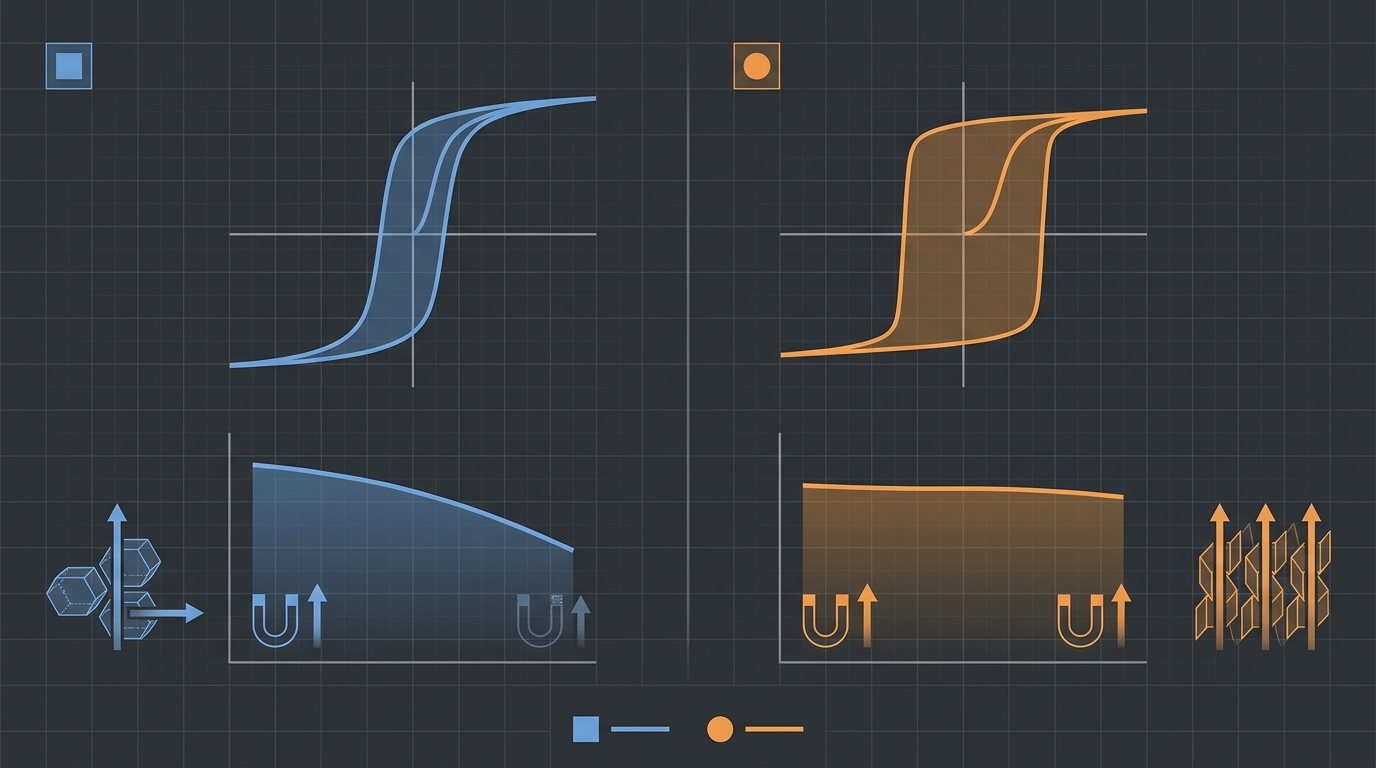
The divide between SmCo5 and Sm2Co17 is not just a chemistry label. It shapes the magnetic behavior, the processing route, and the qualification logic. SmCo5 is the older material family and is commonly recognized for excellent coercivity and magnetic stability. In practical reviews, it is often associated with applications where resistance to demagnetization is the dominant requirement. Sm2Co17, by contrast, generally offers higher remanence and a higher energy product than SmCo5 while retaining much of the thermal and demagnetization resilience that makes SmCo attractive in the first place.
One recurring discovery in magnet qualification work is that design teams sometimes remember the “SmCo” label but not the family-specific behavior. That can create confusion later, especially when a subassembly originally built around Sm2Co17 is treated as interchangeable with SmCo5. In documentation reviews, the decisive point is usually the actual operating envelope: field strength needed in the available volume, demagnetization margin, temperature exposure, and tolerance for magnetic aging. The material name alone rarely captures those differences.
Why missiles and aerospace systems still use SmCo
The defense case for samarium-cobalt is mainly environmental. Missile and aerospace hardware can experience rapid thermal changes during launch or flight, localized hot spots from adjacent electronics, vibration, shock, and limited cooling volume. A magnet that performs well on a room-temperature datasheet can become less attractive when those conditions are introduced. SmCo remains important because it is broadly regarded as a high temperature magnet platform with better magnetic retention at elevated temperatures than many NdFeB grades, especially once long-duration exposure and demagnetization risk are included in the picture.
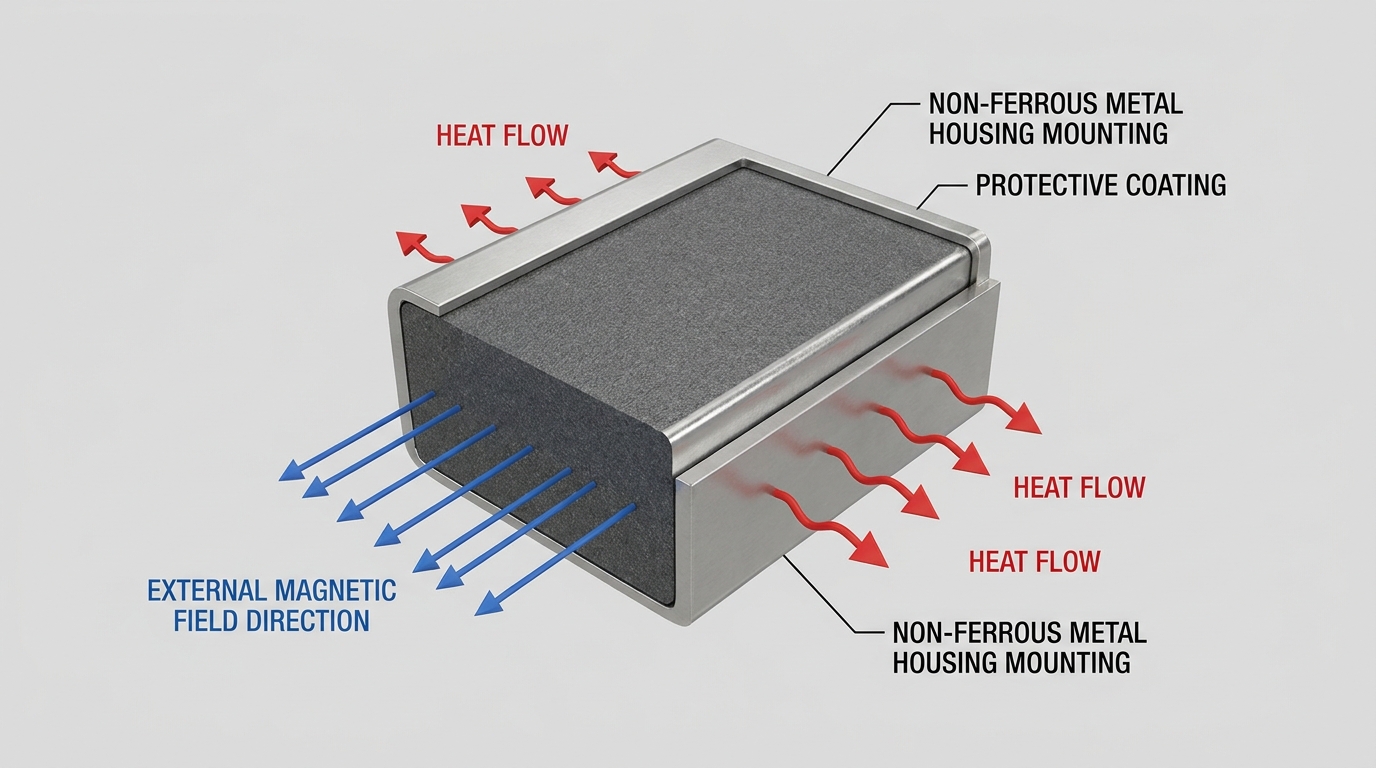
That explains why SmCo continues to appear in missile guidance subsystems, fin actuators, precision motors, inertial devices, aerospace sensors, and compact servo assemblies. The material is not universally stronger than NdFeB, and that is not the point. The point is stability when the system is hot, space-constrained, and mechanically stressed. In many defense magnets, thermal confidence matters more than extracting the highest possible ambient-field performance from the smallest package.
The operating temperature advantage and the limits around it
Commercial magnet literature consistently places samarium-cobalt in the high-temperature category relative to NdFeB, but exact limits vary by grade, geometry, magnetic circuit, and surrounding materials. That last clause matters. In real assemblies, the magnet is only one thermal element in the chain. Adhesives, insulation systems, neighboring electronics, and mechanical interfaces often become the true limit before the magnet chemistry does. A familiar discovery in aerospace assemblies is that the “SmCo temperature margin” exists on paper, while the packaging stack remains the weak point.
This is one reason the phrase high temperature magnet needs operational context. SmCo’s advantage is real, but it is system-dependent. A well-designed SmCo motor rotor, sensor bias magnet, or actuator element can preserve magnetic performance under conditions that challenge NdFeB. A poorly integrated assembly can still fail through cracking, adhesive degradation, thermal mismatch, or incomplete demagnetization analysis. In practice, the magnet choice and the package design are inseparable.
Supply chain perimeter: where samarium comes from
For supply-chain analysis, the first important fact is that samarium is rarely a standalone mine story. It is typically produced through broader rare-earth mining and separation systems, with feedstocks such as bastnäsite and monazite yielding mixed rare-earth concentrates. Samarium then emerges from downstream separation as part of an LREE oxide flow rather than a simple direct line from mine to finished magnet. That is why samarium production is best understood as tied to LREE oxides and to the availability of separation capacity, reagents, permits, and metallization capability.
This matters because a samarium-cobalt supply chain can appear diversified at the magnet plant level while remaining concentrated upstream in rare-earth separation. A magnet fabricator may sit in one jurisdiction, the alloy stage in another, and the oxide separation step in another still. Recent industry attention has focused heavily on that hidden concentration, especially where defense programs seek traceable inputs outside China but still rely on processing steps that remain difficult to replicate at scale.
Cobalt concentration adds a second strategic risk layer
Samarium-cobalt is also a cobalt story. Cobalt mining has long been associated with concentrated upstream exposure, particularly through the Democratic Republic of the Congo, while refining capacity is heavily concentrated in China. For defense-grade magnet supply chains, that creates a separate risk layer from rare-earth separation. Even when samarium availability is manageable, cobalt traceability, refining geography, and purity control can still shape qualification outcomes.
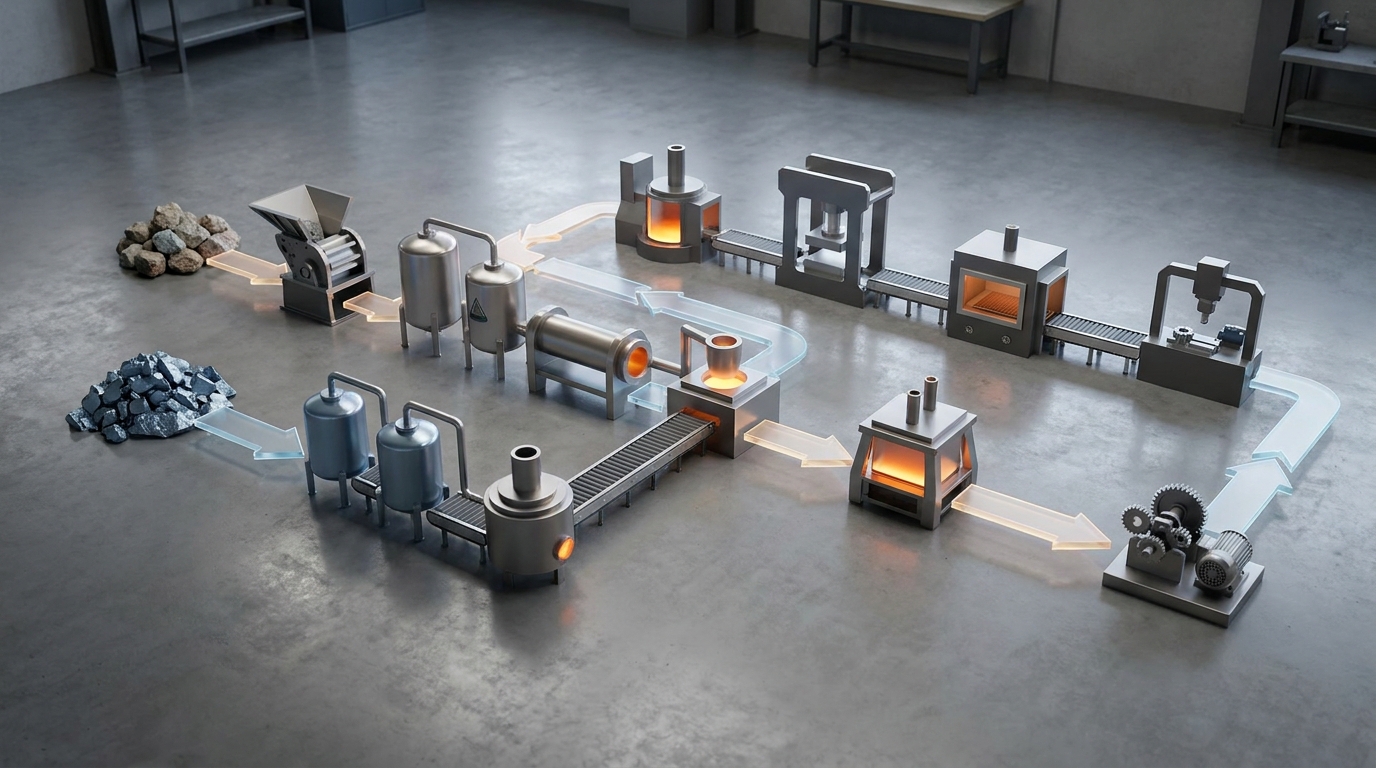
The practical implication is that an SmCo magnet supply chain is never a single-material chain. It sits at the intersection of rare-earth separation, cobalt metallurgy, powder preparation, sintering, machining, magnetization, and compliance documentation. Export controls, sanctions screening, environmental scrutiny, and end-use certification can all become relevant depending on route and jurisdiction. In recent reviews, the documentation burden has often been as consequential as the physical material flow.
Observed failure modes in SmCo supply chains
- Family mismatch: substitution between SmCo5 and Sm2Co17 without a fresh review of coercivity, remanence, and thermal behavior.
- Hidden single-source exposure: multiple distributors tied back to the same oxide separator, cobalt refiner, or alloy house.
- Brittleness and yield loss: SmCo is mechanically brittle, so grinding, machining, and handling can create chipping, crack initiation, or elevated scrap during qualification builds.
- Documentation gaps: incomplete lot traceability, chemistry certificates, or magnetic-property records delaying aerospace approval even when the physical magnet is available.
- System-level thermal misunderstanding: the magnet survives the heat load, but adhesives, platings, or adjacent components do not.
- Geopolitical route disruption: export restrictions, sanctions exposure, or logistics breaks affecting cobalt or rare-earth processing stages rather than final magnet assembly.
A notable operational pattern is that shortages are not always visible as “no material available.” They often show up as partial availability with uncertain traceability, or as technically acceptable material that does not align with prior qualification records. For aerospace and missile programs, that distinction can be the difference between continuity and a prolonged revalidation cycle.
Observed risk-management options in the market
Across high-reliability programs, several management patterns appear repeatedly. One is multi-jurisdiction qualification, where oxide, alloy, and final magnet stages are not all tied to a single country. Another is selective buffering at the finished-component stage rather than at intermediate chemistry stages, especially where machining and magnetization create long approval paths. A third is design branching, in which some subsystems preserve an NdFeB path for moderate environments while the hotter or more mission-critical locations remain locked to SmCo.
Documentation hardening is another common pattern. Material declarations, chemistry records, demagnetization data, and lot-level traceability often become central artifacts rather than administrative attachments. In recent supply-chain work, the strongest differentiator has frequently been not nominal capacity, but the ability to connect samarium separation, cobalt source, alloy batch, and final magnetic properties into a coherent qualification record.
What samarium-cobalt is used for
In practical terms, samarium-cobalt is used where magnetic performance has to survive a demanding environment. Defense and aerospace examples include missile control actuators, guidance components, gyroscopic and inertial assemblies, high-reliability sensors, compact motors, and servo mechanisms. Outside defense, samarium uses include specialty industrial motors, instrumentation, medical systems, and other assemblies where heat and magnetic stability outweigh the priority of lowest-cost magnet volume.
The enduring relevance of samarium-cobalt comes from that combination of material behavior and supply-chain complexity. Technically, it remains one of the established answers to heat, demagnetization, and long-life stability. Commercially, it depends on two sensitive upstream chains at once: LREE separation for samarium and geopolitically concentrated cobalt refining. Any public discussion of SmCo in defense is so incomplete without both halves of the picture.