
China’s rare earth regime is often described as an export ban. That framing is incomplete. The substantive market change over the past decade has been the shift from a simple trade-restriction narrative to a layered control system covering mining, separation, approved producers, export licensing, and selected technology transfers.
For supply chains, the central point is straightforward: the china rare earth export quota is not a single blanket ceiling on all outbound rare earth material. The system works first as a domestic production-allocation mechanism and only then interacts with export controls, customs procedures, and product-specific restrictions. That distinction matters because disruption can occur even without a formal ban if upstream output, processing, or documentation falls outside approved channels.
Key Takeaways
- China’s rare earth controls operate through multiple layers: production quotas, approved producer lists, export licensing, and technology controls.
- MIIT and MNR sit at the core of the system: MIIT on industrial administration and quota oversight, MNR on resource governance and upstream mining control.
- The quota regime primarily governs how much approved firms may mine and separate, not a universal export ceiling across every rare earth product.
- The sector is concentrated in a small group of large state-linked rare earth producers, which limits the number of compliant supply nodes.
- Market risk is shaped less by the term “ban” than by product scope, producer status, licensing documentation, and end-use scrutiny.
What the quota system actually is
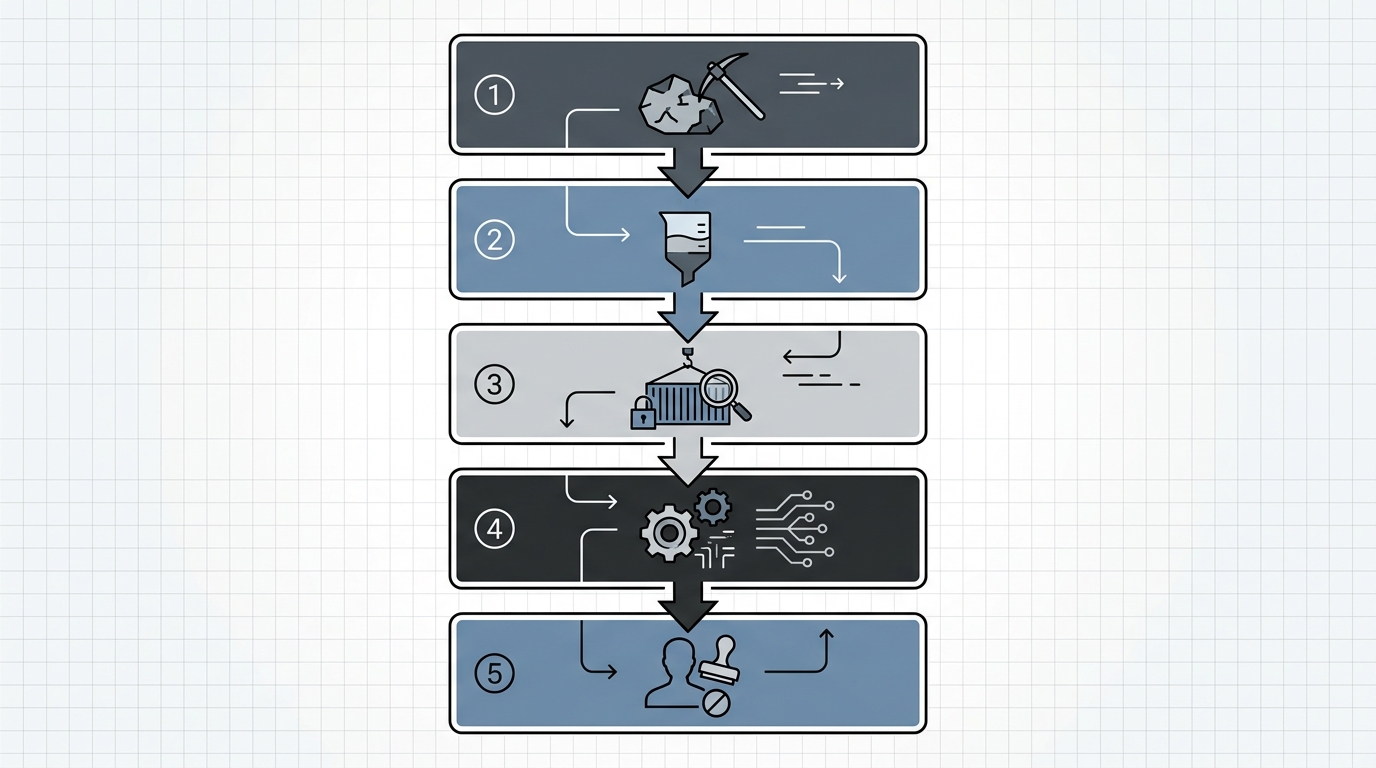
The best way to understand China rare earth control is to separate domestic production quotas from export controls. Since 2010, China has used quota mechanisms to regulate how much rare earth material can be mined and how much can be separated by approved firms. These quotas function as an administrative allocation tool rather than a market-balancing instrument.
In practice, the regime is designed to influence four things: legal output, industrial concentration, environmental and resource oversight, and compliance visibility across the supply chain. This means the system controls who may produce, how much approved material enters the legal market, and how traceable that material is once it moves toward export.
What it does not do is impose one identical rule across all rare earth oxides, metals, alloys, magnets, and related technologies. It also does not mean every shipment is automatically prohibited. Export eligibility depends on the product category, the producer, the exporter, and the applicable licensing pathway.
MIIT and MNR: the two key authorities
The requested distinction between MIIT and MNR is essential to understanding the mechanism.
- MIIT, the Ministry of Industry and Information Technology, is central to industrial administration of the rare earth sector. Its role is tied to production oversight, processing governance, and quota-related industrial policy.
- MNR, the Ministry of Natural Resources, sits on the resource side of the system. Its role relates to upstream resource governance, mining administration, and the control environment around extraction rights and geological resource management.
This dual structure shows why the regime is broader than customs enforcement. Rare earth control in China begins at the mine and separation stage, not at the port. A firm may have technical capability to produce rare earth material but remain excluded from lawful output if it is outside the approved quota and resource-governance framework.
Who receives quotas
The quota system is concentrated among a limited group of large state-linked producers. The exact producer roster can evolve, but the structural point is stable: China has long favored a small SOE-centered producer universe rather than broad distribution of quota rights across many independent firms.
That concentration has two direct supply-chain effects. First, it reduces the number of legal and scalable upstream supply nodes. Second, it makes traceability and compliance heavily dependent on the documentation and internal governance of a relatively small set of groups and affiliated production assets. In operational terms, the approved producer list is itself a control lever.
How the regime evolved since 2010
The modern system became globally visible in 2010, when China’s rare earth restrictions became a major trade and geopolitical issue. From that point, the regime developed beyond a narrow export story into a broader industrial-management framework.

During the 2010s, quotas and consolidation were used to discipline a fragmented sector that had been associated with smuggling, uneven environmental performance, and weak control over production. The state response was to centralize the industry, tighten lawful production channels, and anchor supply within a smaller number of major groups.
More recently, the framework has been layered with additional controls affecting technology, product categories, and export documentation. This matters because market participants often treat every rare earth announcement as if it referred to the same legal instrument. In reality, one measure may concern mining and separation quotas, another may concern export licensing, and another may concern technology transfer or end-use restrictions. These tools are related but not interchangeable.
What the quota does and does not constrain
The quota system constrains permitted production. It sets the legal boundaries for mining and separation by approved firms. That affects availability of upstream feedstock for downstream processors and exporters.
It also constrains market structure. Because only a narrow producer group operates inside the approved framework, the quota regime shapes industrial concentration as much as physical output.
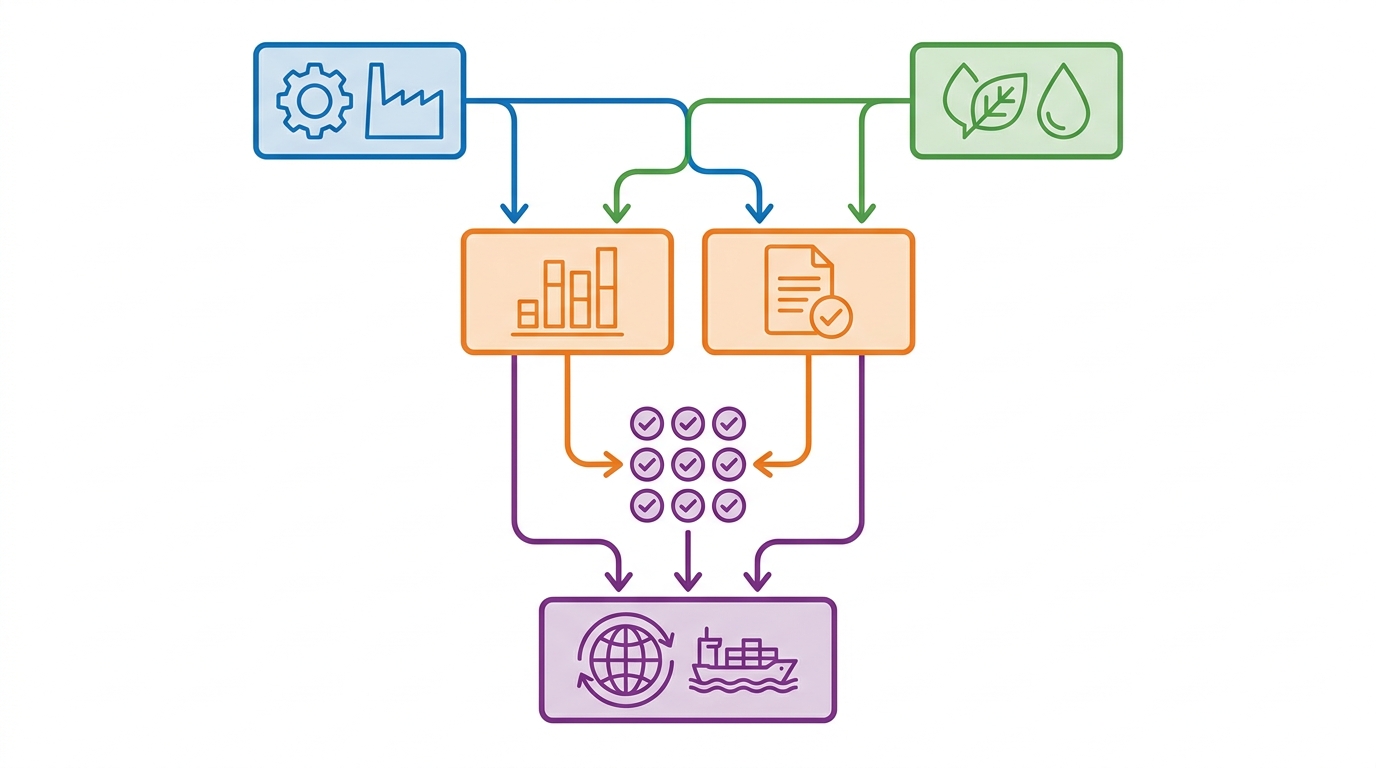
It indirectly constrains exports, because export licensing sits downstream of lawful production. If upstream material is not produced through approved channels, export compliance becomes far more difficult. This is why the phrase rare earth export ban can mislead. In many cases, the practical barrier is not a universal prohibition but the interaction between producer eligibility, product classification, and licensing documentation.
What the regime does not constrain in a uniform way is every product at every point in the value chain. Ore, oxides, metals, magnets, and technologies are not always treated identically. The market effect therefore depends on where the restriction is applied: mining, separation, export paperwork, or technology transfer.
Why this matters for supply chains
For downstream industry, the significance of the miit rare earth quota lies in execution risk rather than headline language. A shipment can be delayed by upstream quota status, producer affiliation, incomplete licensing, or added scrutiny around end use. This is especially relevant for sectors with low substitution flexibility, including magnets for automotive systems, aerospace components, electronics, and industrial equipment.
The broader lesson is that China rare earth policy functions as a structural governance system. It is not just an export switch that is either on or off. It combines resource administration, industrial concentration, production allocation, export review, and selected technology controls. That combination explains why supply risk can intensify even when no new blanket prohibition is announced and why the approved producer base remains one of the most important indicators in the entire rare earth chain.